
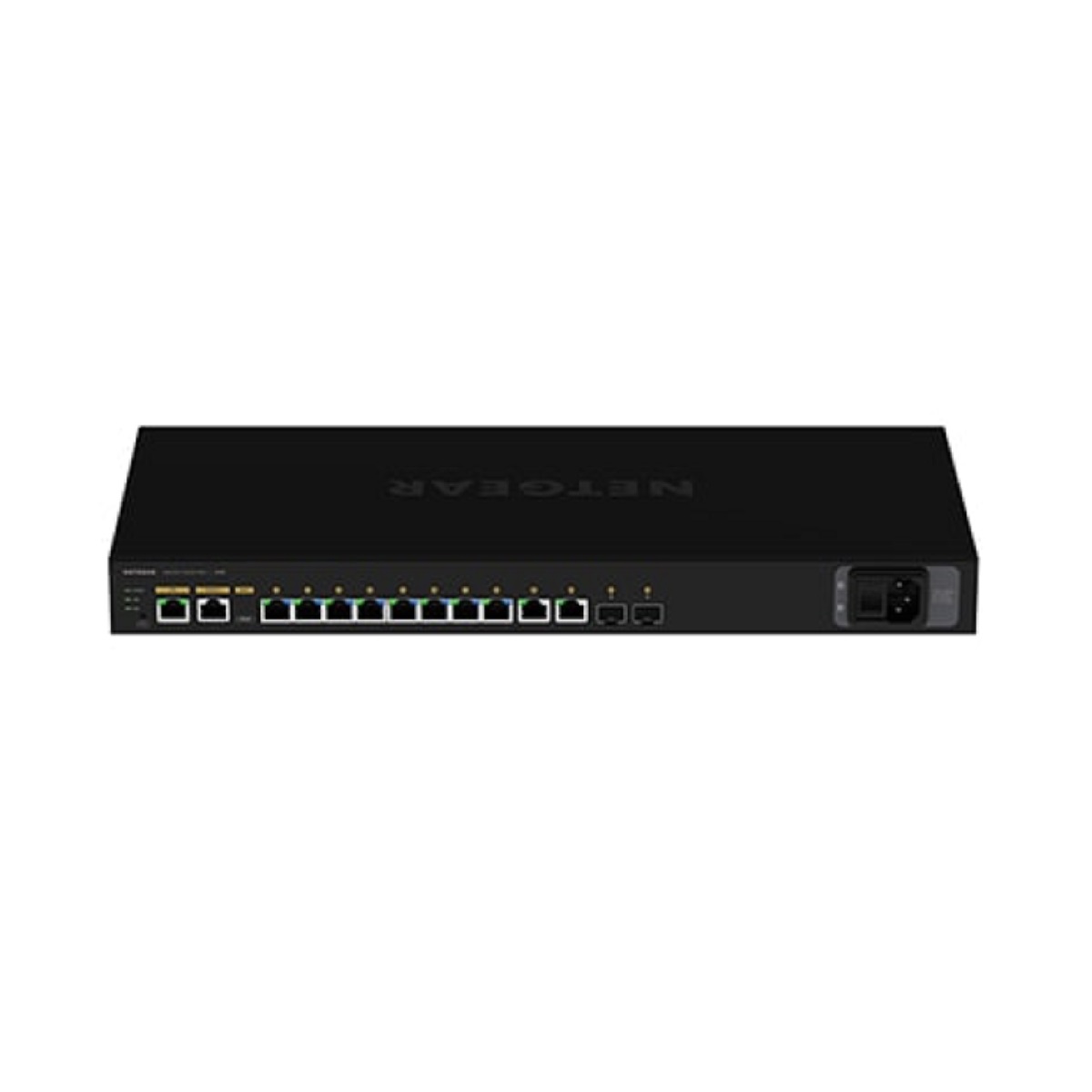
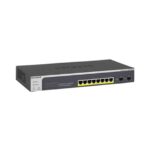
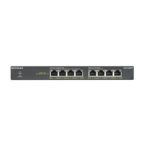
NETGEAR (GSM4212P) M4250-10G2F-PoE+ AV Line 8 Port Gigabit Switch
£793.52 inc.VAT / £661.27 exc.VAT
NETGEAR M4250-10G2F-PoE+ (GSM4212P) AV Line 8-Port Managed Rackmount Gigabit PoE+ Switch w/ 2 x 1GbE RJ45 Ports & 2 x 1GbE SFP Ports (125W)
NETGEAR (GSM4212P) M4250-10G2F-PoE+ AV Line 8 Port Gigabit Switch comes pre-configured for standard audio and video signals.

NETGEAR M4250-10G2F-PoE+ (GSM4212P) AV Line 8-Port Managed Rackmount Gigabit PoE+ Switch w/ 2 x 1GbE RJ45 Ports & 2 x 1GbE SFP Ports (125W)
NETGEAR (GSM4212P) M4250-10G2F-PoE+ AV Line 8 Port Gigabit Switch
NETGEAR (GSM4212P) M4250-10G2F-PoE+ AV Line 8 Port Gigabit Switch comes pre-configured for standard audio and video signals. When requirements are more specific, an AV user interface offers customization with port-based profiles.
For audio, Dante, Q-SYS and AES67 profiles are available, as well as an AVB profile (requires an AVB license, sold separately). For video the M4250-10G2F-PoE+ offers profiles for NVX, SVSI, Q-SYS, NDI, Dante etc. as well as audio/video/control mixed profiles.
When using multiple switches, NETGEAR IGMP Plus brings automation for you to just connect them together.

Gigabit Switch (GSM4212P) M4250-10G2F-PoE+ AV Line 8 Port
Key Features
- Eight (8) 1GbE PoE+ ports with 125W PoE budget for multi-switch audio or single-switch video deployments.
- Two (2) RJ45 1G additional ports and two (2) SFP 1G fiber uplinks.
- Fanless mode possible with max 25ºC ambient, 35ºC internal sensor and 80W PoE loading.
- Quiet mode acoustic noise 27.38dBA@25ºC when all ports used and 125W PoE loading.
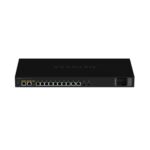
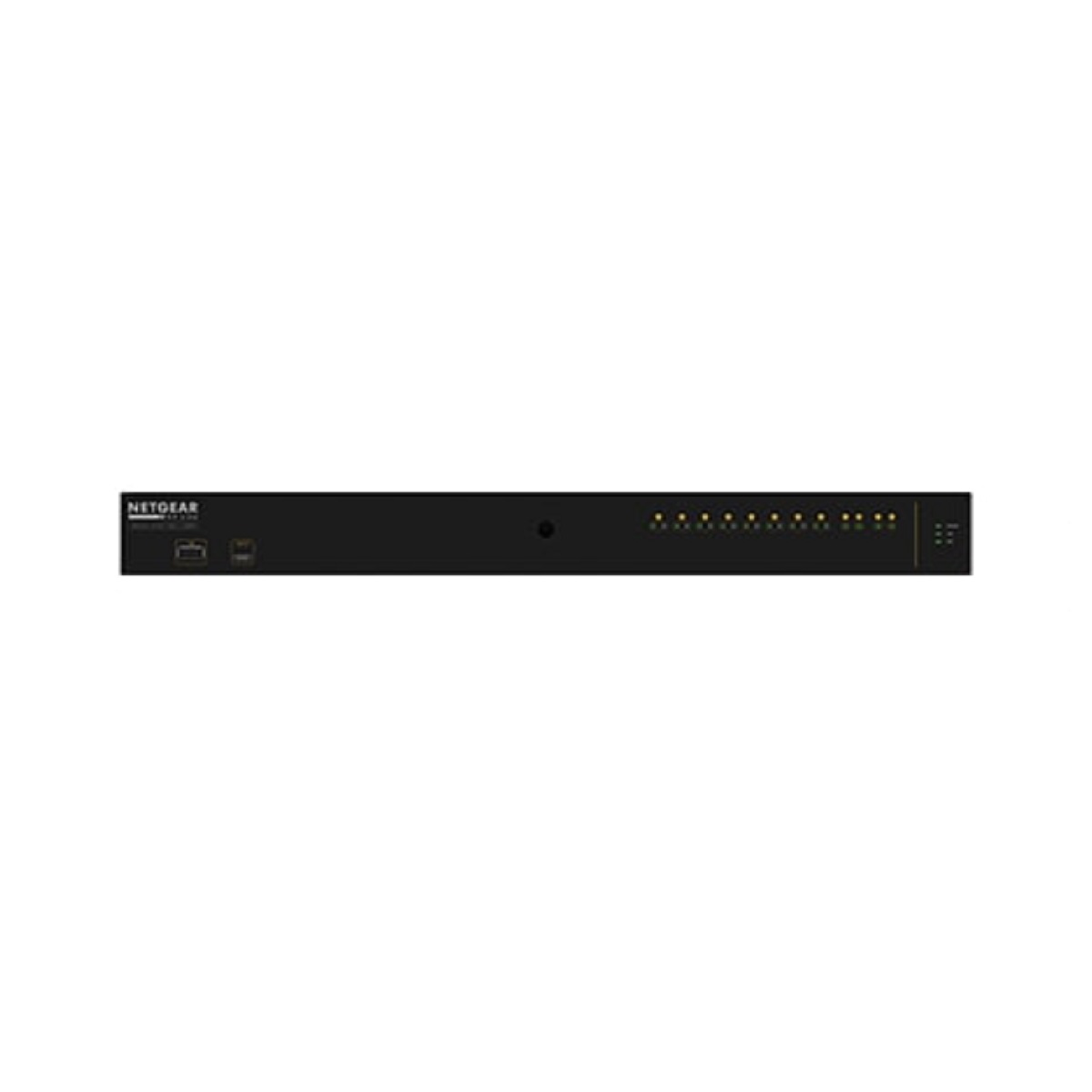
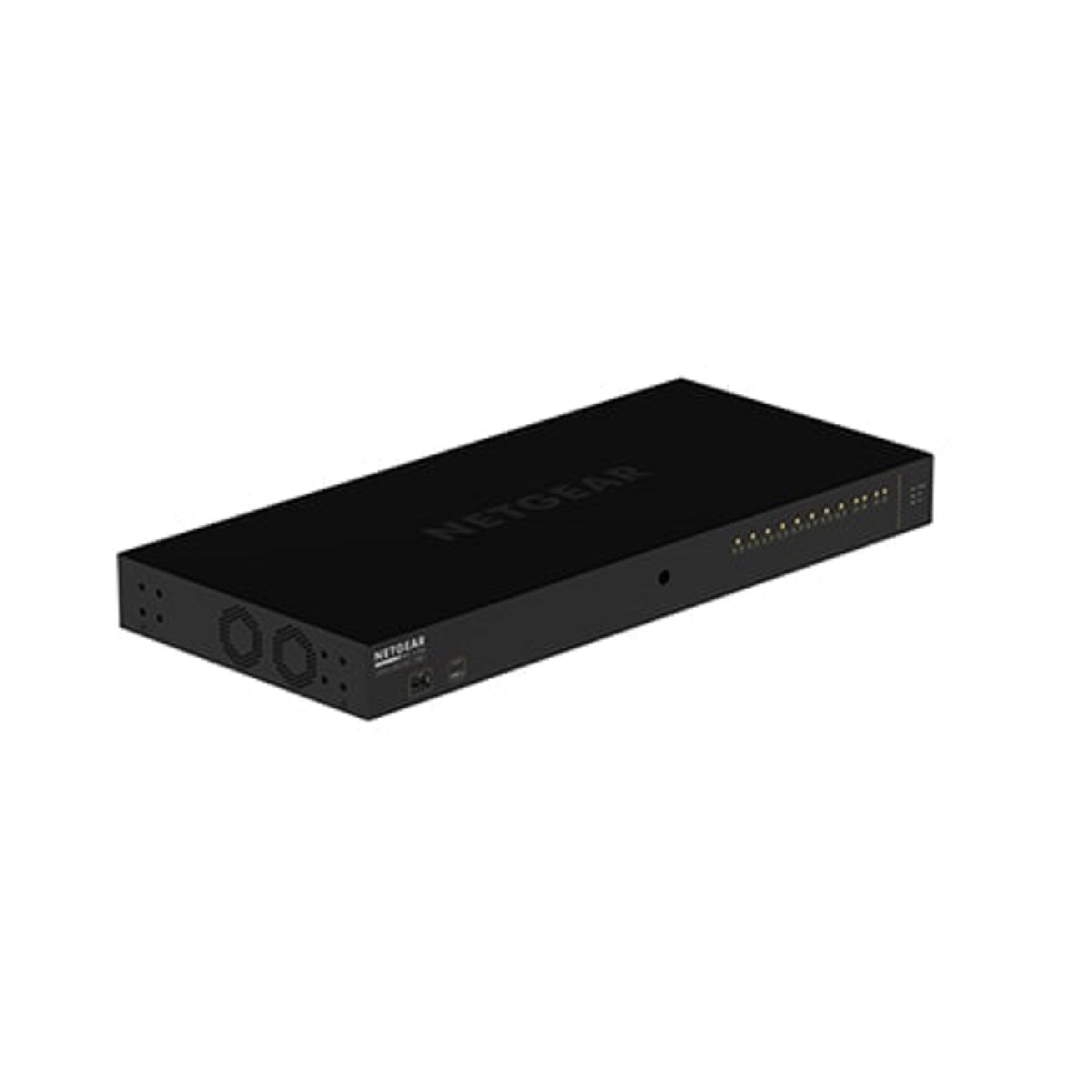
- 1U 200mm deep rackmount with front black display panel and all ports in the back.
- Possible reversed mounting with ports in the front including recessed mounting.
- Universal mounting options outside the rack with bottom M5 and front M10 threaded holes.
- Pre-configured for Audio and Video over IP out of the box.
Support for Audio Video Bridging (AVB)
One of the many features designed into this M4250-10G2F-PoE+ switch is full support for Audio Video Bridging (AVB), an industry standard for transporting content over a network. AVB is used most often when very low latency is required such as in live performances when lip sync is critical. The AV Line M4250-10G2F-PoE+ switch can be optionally licensed for AVB support.
Ease of deployment
Automatic configuration with DHCP and Bootup Auto Install eases large deployments with a scalable configuration files management capability, mapping IP addresses and host names and providing individual configuration files to multiple switches as soon as they are initialized on the network. Both the Switch Serial Number and primary MAC address are reported by a simple “show hardware” command in CLI – facilitating discovery and remote configuration operations. M4300 DHCP L2 Relay agents eliminate the need to have a DHCP server on each physical network or subnet:
- DHCP Relay agents process DHCP messages and generate new DHCP messages
- Supports DHCP Relay Option 82 circuit-id and remote-id for VLANs
- DHCP Relay agents are typically IP routing-aware devices and can be referred to as Layer 3 relay agents
Automatic Voice over IP prioritisation with Auto-VoIP simplifies most complex multi-vendor IP telephones deployments either based on protocols (SIP, H323 and SCCP) or on OUI bytes (default database and user-based OUIs) in the phone source MAC address; providing the best class of service to VoIP streams (both data and signaling) over other ordinary traffic by classifying traffic, and enabling correct egress queue configuration. An associated Voice VLAN can be easily configured with Auto-VoIP for further traffic isolation. When deployed IP phones are LLDP-MED compliant, the Voice VLAN will use LLDP-MED to pass on the VLAN ID, 802.1P priority and DSCP values to the IP phones, accelerating convergent deployments.
Flow Control
802.3x Flow Control implementation per IEEE 802.3 Annex 31B specifications with Symmetric flow control, Asymmetric flow control or No flow control:
- Asymmetric flow control allows the switch to respond to received PAUSE frames, but the ports cannot generate PAUSE frames
- Symmetric flow control allows the switch to both respond to, and generate MAC control PAUSE frames
Allows traffic from one device to be throttled for a specified period of time: a device that wishes to inhibit transmission of data frames from another device on the LAN transmits a PAUSE frame:
- A device that wishes to inhibit transmission of data frames from another device on the LAN transmits a PAUSE frame
UDLD Support
UDLD implementation detects unidirectional links physical ports (UDLD must be enabled on both sides of the link in order to detect an unidirectional link)
- UDLD protocol operates by exchanging packets containing information about neighbouring devices
- The purpose is to detect and avoid unidirectional link forwarding anomalies in a Layer 2 communication channel
Target Application
NETGEAR has enhanced the experience for AV professionals by including a new user interface designed from the ground up. Pro AV customers don’t have to settle for an IT-centric interface with settings and IT-specific functionality they will never need.
The AV interface presents the common AV controls right up front with user-selectable profiles for common AV platforms making it a snap to ensure the settings are correct for a specific audio or video application.
Specifications
Auto-sensing RJ45 PoE 10/100/1000BASE-T
- 8 ports PoE+
Auto-sensing RJ45 10/100/1000BASE-T
- 2
Auto-sensing SFP 100/1000BASE-X
- 2
Total Usable Port Count
- 12 x 1G Ports
Management Ports
- Console ports
- Serial RS232 RJ45 (rear); USB-C (rear)
- Service port (Out-of-band Ethernet)
- 1 x RJ45 10/100/1000BASE-T (rear)
- Storage port
- 1 x USB-A (front)
Fixed Power Supplies
- Internal PSU with on/off switch
Fixed fans
- Side-to-side airflow
Power over Ethernet
PoE+ Ports (802.3at)
- 8
PoE Budget @ 110V AC in
- 125 Watts
Processor/Memory
Processor (CPU)
- Integrated ARM A9 1.25Ghz CPU in switching silicon (32-bit)
System memory (RAM)
- 2 GB
Code storage (flash)
- 256 MB
- Dual firmware image
Packet Buffer Memory
- 16 Mb
- Dynamically shared across only used ports
Performance Summary
Switching fabric
- 24 Gbps
Throughput (64-byte frames)
- 17.86 Mpps
Latency – 1G Fibre
- 64-byte frames
- 2.271µs
- 512-byte frames
- 2.257µs
- 1024-byte frames
- 2.267µs
- 1518-byte frames
- 2.266µs
Latency – 1G Copper
- 64-byte frames
- 2.133µs
- 512-byte frames
- 2.136µs
- 1024-byte frames
- 2.131µs
- 1518-byte frames
- 2.142µs
Green Ethernet – Energy Efficient Ethernet (EEE)
- Compliant with IEEE 802.3az Energy Efficient Ethernet Task Force
- Deactivated by default
Other Metrics
Forwarding mode
- Store-and-forward
Addressing
- 48-bit MAC address
Address database size
- 16K MAC addresses
Number of VLANs
- 4,093 VLANs (802.1Q) simultaneously
Number of multicast groups filtered (IGMP)
- 4K total (2,048 IPv4 and 2,048 IPv6)
Number of Link Aggregation Groups (LAGs)
- 8 LAGs with up to 8 ports per group
- 802.3ad / 802.1AX-2008
Number of hardware queues for QoS
- 8 queues
Number of routes
- IPv4
- 894 IPv4 Unicast Routes in Default IPv4 Basic SDM Template
- IPv6
- 126 IPv6 Unicast Routes in Default IPv4 Basic SDM Template
- Note: SDM (System Data Management, or switch database) templates allow for granular system resources distribution depending on IPv4 or IPv6 applications.
Number of static routes
- IPv4
- 64
- IPv6
- 64
RIP application route scaling
- IPv4
- 32 in Default IPv4 Basic SDM Template
Number of IP interfaces (port or VLAN)
- 128
Jumbo frame support
- up to 12KB packet size
Acoustic noise (@ 25°C ambient (77°F))
Testing method
- Following the ISO-7779 standard. Bystander Mode. Chamber Temp 25ºC during testing unless noted otherwise. Full, 100%, Data and PoE loaded. Worst case.
SPL (Sound Pressure Level)
- dBA values are SPL (Sound Pressure Level) values, testing following the ISO-7779 standard
Fan management
- Three modes are configurable using the AV GUI or the CLI: Fan Off mode, Quiet mode (default), and Cool mode
Fan Off mode
- Acoustic noise
- 0dBA (fanless)
- Maximum conditions
- Ambient 25ºC, Sensor =42ºC, PoE Power Load 80W, all ports can be used
- Case Temperature (top)
- 37.1ºC
Quiet mode
Conditions
- Ambient 25ºC
- Sensor =36ºC
- PoE Power Load 125W
- all ports can be used
Fan duty
- 25
Acoustic noise
- 27.38dBA
Case Temperature (top)
- 35.9ºC
Cool mode
Fan duty
- 100
Acoustic noise
- 55dBA
Case Temperature (top)
- 27.2ºC when ambient 25ºC
Heat Dissipation (BTU)
- Without PoE, all ports
- 17.32W – 59.13 BTU/hr
- With Max PoE, all ports
- 163.9W – 559.55 BTU/hr
- Standby without any port connection
- 8.53W – 29.12BTU/hr
Mean Time Between Failures (MTBF)
- 25 °C ambient (77 °F)
- 778,769 hours (~88.9 years)
- @ 45 °C ambient(113 °F)
- 530,659 hours (~60.6 years)
L2 Services – VLANs
IEEE 802.1Q VLAN Tagging
- Yes
- 802.1Q-1998
- Up to 4,093 VLANs – 802.1Q Tagging
Protocol Based VLANs
- IP subnet
- Yes
- ARP
- Yes
- IPX
- Yes
Subnet based VLANs
- Yes
MAC based VLANs
- Yes
Voice VLAN
- Yes
- Based on phones OUI bytes (internal database, or user-maintained) or protocols (SIP, H323 and SCCP)
Private Edge VLAN
- Yes
Private VLAN
- Yes
EEE 802.1x (802.1x-2004)
- Guest VLAN
- Yes
- RADIUS based VLAN assignment via .1x
- Yes
- IP phones and PCs can authenticate on the same port but under different VLAN assignment policies
- RADIUS based Filter ID assignment via .1x
- Yes
- MAC-based .1x
- Yes
- Unauthenticated VLAN
- Yes
Double VLAN Tagging
- Enabling dvlan-tunnel makes interface
- Yes
- Global ethertype (TPID)
- Yes
- Interface ethertype (TPID)
- Yes
- Customer ID using PVID
- Yes
GARP with GVRP/GMRP
- Yes
- Automatic registration for membership in VLANs or in multicast groups
Multiple Registration Protocol (MRP)
- Yes
- Can replace GARP functionality
Multicast VLAN Registration Protocol (MVRP)
- Yes
- Can replace GARP functionality
MVR (Multicast VLAN registration)
- Yes
L2 Services – Availability
IEEE 802.3ad – LAGs
- LACP
- Yes
- LACP automatically reverts to and from Static LAG
- Yes
- Static LAGs
- Yes
LAG Hashing
- Yes
LAG Member Port Flaps Tracking
- Yes
Storm Control
- Yes
IEEE 802.3x (Full Duplex and flow control)
- Per port Flow Control
- Yes
- Asymmetric and Symmetric Flow Control
UDLD Support (Unidirectional Link Detection)
- Normal-Mode
- Yes
- Aggressive-Mode
- Yes
Link Dependency
- Yes
- Allow the link status of specified ports to be dependent on the link status of other ports
IEEE 802.1D Spanning Tree Protocol
- Yes
IEEE 802.1w Rapid Spanning Tree
- Yes
IEEE 802.1s Multiple Spanning Tree
- Yes
Per VLAN STP (PVSTP) with Fast Uplink and Fast Backbone
- Yes
- PVST+ interoperability
Per VLAN Rapid STP (PVRSTP)
- Yes
- RPVST+ interoperability
STP Loop Guard
- Yes
STP Root Guard
- Yes
STP BPDU Guard
- Yes
STP BPDU Filtering
- Yes
STP BPDU Flooding
- Yes
L2 Services – Multicast Filtering
IGMPv2 Snooping Support
- Yes
IGMPv3 Snooping Support
- Yes
NETGEAR IGMP Plus Enhanced Implementation
- Yes
- For automatic multicast across M4250 / M4300 / M4500 (Spine and Leaf) at Layer 2, removing the need for L3 PIM routing
MLDv1 Snooping Support
- Yes
MLDv2 Snooping Support
- Yes
Expedited Leave function
- Yes
Static L2 Multicast Filtering
- Yes
Enable IGMP / MLD Snooping per VLAN
- Yes
IGMPv1/v2 Snooping Queries, compatible v3 queries
- Yes
MLDv1 Snooping Quarrier
- Yes
MGMD Snooping
- Control Packet Flooding
- Yes
- Flooding to mRouter Ports
- Yes
- Remove Flood-All-Unregistered Option
- Yes
Multicast VLAN registration (MVR)
- Yes
L3 Services – Multicast Routing
IGMP Proxy
- Yes
MLD Proxy
- Yes
Any Source Multicast (ASM)
Yes
Source Specific Multicast (SSM)
- Yes
Multicast streams routing between subnets, VLANs
- Yes
Multicast static routes (IPv4, IPv6)
- Yes
Neighbour discovery
- Yes
PIM-DM (Multicast Routing – dense mode)
- Yes
PIM-DM (IPv6)
- Yes
PIM-SM (Multicast Routing – sparse mode)
- Yes
PIM-SM (IPv6)
- Yes
PIM multi-hop RP support
- Yes
PIM Timer Accuracy
- Yes
PIM-SM Unhandled Events
- Yes
IPMC replication (hardware support)
- Yes
L3 Services – DHCP
DHCP IPv4 / DHCP IPv6 Client
- Yes
DHCP IPv4 / DHCP IPv6 Server (Stateless, Stateful)
- Yes
DHCP Snooping IPv4 / IPv6
- Yes
Bootup Relay IPv4 / IPv6
- Yes
DHCP Relay IPv4 / IPv6
- Yes
DHCP Relay Option 82 circuit-id and remote-id for VLANs
- Yes
Multiple Helper IPs
- Yes
Auto Install (DHCP options 66, 67, 150 and 55, 125)
- Yes
L3 Services – Routing
Static Routing / ECMP Static Routing
- Multiple next hops to a given destination
- Yes
- Load sharing, Redundancy
- Yes
- Default routes
- Yes
- Static Reject routes
- Yes
Port Based Routing
- Yes
VLAN Routing
- 802.3ad (LAG) for router ports
- Yes
Loopback Interfaces
- Yes
RIP
- RIPv1/RIPv2
- Yes
IP Multinet ting
- Yes
ICMP throttling
- Yes
Router Discovery Protocol
- Yes
DNS Client
- IPv4/IPv6
IP Helper
- Max IP Helper entries
- 512
IP Event Dampening
- IPv4/IPv6
Proxy ARP
- IPv4/IPv6
ICMP
- ICMP redirect detection in hardware
- Yes
Policy Based Routing (PBR)
- Based on the size of the packet
- Yes
- Based on the Protocol of the payload (Protocol ID field)
- Yes
- Based on Source MAC address
- Yes
- Based on Source or Destination IP address
- Yes
- Based on VLAN tag
- Yes
- Based on Priority(802.1P priority)
- Yes
Network Monitoring and Discovery Services
ISDP (Industry Standard Discovery Protocol)
- Yes
- Can interoperate with devices running CDP
802.1ab LLDP
- Yes
802.1ab LLDP – MED
- Yes
SNMP
- V1, V2, V3
RMON 1,2,3,9
- Yes
sFlow
- Yes (IPv4 and IPv6 headers)
Management
Management ACL (MACAL)
- Yes
- Protects management CPU access through the LAN
- Max Rules
- 64
Out of band Management
- Yes
- In-band management can be shut down entirely when out-of-band management network
Radius accounting
- Yes
- RFC 2565 and RFC 2866
TACACS+
- Yes
Malicious Code Detection
- Yes
- Software image files and Configuration files with digital signatures
Network Traffic
Access Control Lists (ACLs)
- L2 / L3 / L4
- MAC, IPv4, IPv6, TCP, UDP
Time-based ACLs
- Yes
Protocol-based ACLs
- Yes
ACL over VLANs
- Yes
Dynamic ACLs
- Yes
IEEE 802.1x Radius Port Access Authentication
- Yes
- Up to 48 clients (802.1x) per port are supported, including the authentication of the users domain
802.1x MAC Address Authentication Bypass (MAB)
- Yes
- Supplemental authentication mechanism for non-802.1x devices, based on their MAC address only
Network Authentication Successive Tiering
- Yes
- Dot1x-> MAP -> Captive Portal successive authentication methods based on configured time-outs
Port Security
- Yes
IP Source Guard
- Yes
- IPv4 / IPv6
DHCP Snooping
- Yes
- IPv4 / IPv6
Dynamic ARP Inspection
- Yes
- IPv4 / IPv6
IPv6 RA Guard Stateless Mode
- Yes
MAC Filtering
Yes
Port MAC Locking
- Yes
Private Edge VLAN
- Yes
- A protected port doesn’t forward any traffic (unicast, multicast, or broadcast) to any other protected port – same switch
Private VLANs
- Yes
- Scales Private Edge VLANs by providing Layer 2 isolation between ports across switches in same Layer 2 network
Core Switching
- IEEE 802.1AB — Link level discovery protocol
- IEEE 802.1BA-2011, 802.1AS-2011 gPTP, 802.1Qav-2009 FQTSS, 802.1Qat-2010 MSRP, 802.1ak MMRP, MVRP with AVB licence
- IEEE 802.1D — Spanning tree
- IEEE 802.3ac — VLAN tagging
- IEEE 802.1p — Ethernet priority with user provisioning and mapping
- IEEE 802.3ad — Link aggregation
- IEEE 802.1Q — Virtual LANs w/ port-based VLANs
- IEEE 802.3ae — 10 GbE
- IEEE 802.1S — Multiple spanning tree compatibility
- IEEE 802.3af — Power over Ethernet
- IEEE 802.1v — Protocol-based VLANs
- IEEE 802.3at — Power over Ethernet Plus
- IEEE 802.1W — Rapid spanning tree
- IEEE 802.3x — Flow control
- iEEE 802.1AB — LLDP
- ANSI/TIA-1057 — LLDP-MED
- IEEE 802.1X — Port-based authentication
- GARP — Generic Attribute Registration Protocol: clause 12, 802.1D-2004
- IEEE 802.3 — 10Base-T
- GMRP — Dynamic L2 multicast registration: clause 10, 802.1D-2004
- IEEE 802.3u — 100Base-T
- GVRP — Dynamic VLAN registration: clause 11.2, 802.1Q-2003
- IEEE 802.3ab — 1000Base-T
- RFC 4541 — IGMP snooping and MLD snooping
Additional Layer 2 Functionality
- Broadcast storm recovery
- IGMP and MLD snooping queries
- Double VLAN/VMAN tagging
- Port MAC locking
- DHCP Snooping
- MAC-based VLANs
- Dynamic ARP inspection
- IP source guard
- Independent VLAN Learning (IVL) support
- IP subnet-based VLANs
- IPv6 classification APIs
- Voice VLANs
- Jumbo Ethernet frames
- Protected ports
- Port mirroring
- IGMP snooping
- Static MAC filtering
- Green Ethernet power savings mode
System Facilities
- Event and error logging facility
- RFC 2030 — Simple Network Time Protocol (SNTP) V4 for IPv4, IPv6, and OSI
- Runtime and configuration download capability
- RFC 2131 — DHCP Client/Server
- PING utility
- RFC 2132 — DHCP options and BOOTP vendor extensions
- XMODEM
- RFC 2865 — RADIUS client
- RFC 768 — UDP
- RFC 2866 — RADIUS accounting
- RFC 783 — TFTP
- RFC 2868 — RADIUS attributes for tunnel protocol support
- RFC 791 — IP
- RFC 2869 — RADIUS extensions
- RFC 792 — ICMP
- RFC 28869bis — RADIUS support for Extensible Authentication Protocol (EAP)
- RFC 793 — TCP
- RFC 5176 — RADIUS Change of Auth
Management
- Password management
- Yes
- Configurable Management VLAN
- Yes
- Out-of-band Management
- Yes
- In-band management can be shut down using Management ACLs when separate management network
- Auto Install (BOOTP and DHCP options 66, 67, 150 and 55, 125)
- Yes
- Scalable deployment process (firmware, config)
- Admin access control via Radius and TACACS+
- Yes
- Policies, Enable
- Industry standard CLI (IS-CLI)
- Yes
- Command Line interface
- CLI commands logged to a Syslog server
- Yes
- Web-based graphical user interface (GUI)
- Yes
- Fully functional GUI
- Features without Web GUI support
- Authorization List
- CLI only
- Control Plane ACL
- CLI only
- UDLD
- CLI only
- Policy Based Routing
- CLI only
- LLPF
- CLI only
- QoS Policy for Single Rate
- CLI only
- DHCPv6 Snooping
- CLI only
- IPv6 DHCP Relay
- CLI only
- eMail Alerting
- CLI only
- MMRP
- CLI only
- Telnet
- Yes
- IPv6 management
- Yes
- Dual Software (firmware) image
- Yes
- Allows non disruptive firmware upgrade process
- Editable Configuration file
- Yes
- Text-based (CLI commands) configuration file
- Non disruptive Config Management
- Yes
- With new startup configuration file, the switch gracefully resolves any differences with the running config
- IS-CLI Scripting
- Yes
- Port descriptions
- Yes
LEDs
- Per port
- Speed, Link, Activity, PoE – Available both in front and in the rear
- Per device
- Power, Fan – Available both in front and in the rear
Physical Specifications
Dimensions
- Width: 17.32 inches (440 mm)
- Height: 1U – 1.70 inches (43.2 mm)
- Depth: 7.87 inches (200 mm)
Weight
- 6.28 lb (2.850 kg)
Power Consumption
- All ports used, max PoE load, line-rate traffic, maximum
- 163.9W – 559.55 BTU/hr
- All ports used, no PoE, line-rate traffic, maximum
- 17.32W – 59.13 BTU/hr
- Standby, no connection on any port
- 8.53W – 29.12BTU/hr
Environmental Specifications
Operating:
- Temperature
- 32° to 113°F (0° to 45°C)
- Humidity
- 90% maximum relative humidity, non-condensing
- Altitude
- 10,000 ft (3,000 m) maximum
Storage:
- Temperature
- – 4° to 158°F (–20° to 70°C)
- Humidity
- 95% maximum relative humidity, non-condensing
- Altitude
- 10,000 ft (3,000 m) maximum
Electromagnetic Emissions and Immunity
Certifications
- CE: EN 55032:2012+AC:2013/CISPR 32:2012, EN 61000-3-2:2014,
- Class A, EN 61000-3-3:2013, EN 55024:2010
- VCCI : VCCI-CISPR 32:2016, Class A
- RCM: AS/NZS CISPR 32:2013 Class A
- CCC: GB4943.1-2011; YD/T993-1998; GB/T9254-2008 (Class A)
- FCC: 47 CFR FCC Part 15, Class A, ANSI C63.4:2014
- ISED: ICES-003:2016 Issue 6, Class A, ANSI C63.4:2014
- BSMI: CNS 13438 Class A
Package Contents
- 1 x M4250-10G2F-PoE+ (GSM4212P) Switch
- 1 x Power cord
- 1 x RJ45 straight-through wiring serial console cable to DB9
- 1 x USB Type-C to USB-A 2.0 console cable
- 1 x Set of rubber caps for the SFP sockets
- 1 x Set of rubber footpads for tabletop installation
- 1 x Installation guide
- 2 x Regular (short) brackets and screws for two-post rack mount (for front posts) allowing for mounting with ports on the back, or ports on the front of the rack
- 2 x Longer brackets for two-post rack mount (for front posts) recessing the switch by 2 inches in order to make room for the cabling.
Standard Warranty: Lifetime Lifetime
Only logged in customers who have purchased this product may leave a review.
Related Products
TP-Link LS1008G LiteWave 8-Port Unmanaged Desktop Gigabit Switch (10/100/1000Mbps)
TP-Link LS1008G LiteWave 8-Port Unmanaged Gigabit Switch provides an easy and affordable way to expand your wired network.
Out of stock

DrayTek G1080 VigorSwitch 8-Port Smart Managed Desktop Gigabit Switch
The DrayTek G1080 VigorSwitch 8-Port Smart Managed Desktop Gigabit Switch is ideal for SOHO and small businesses with high-performance capability, and is equipped with eight (8) Gigabit Ethernet ports to cater for high bandwidth traffic. The VigorSwitch G1080 is equipped with extensive facilities for maximising your LAN performance, VLAN capability to allow flexible network design, and QoS capability for flexible bandwidth control.
8 in stock
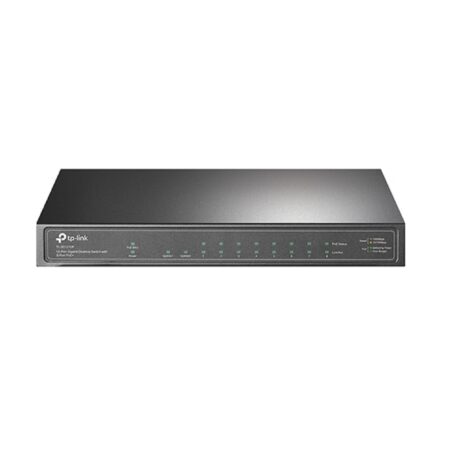
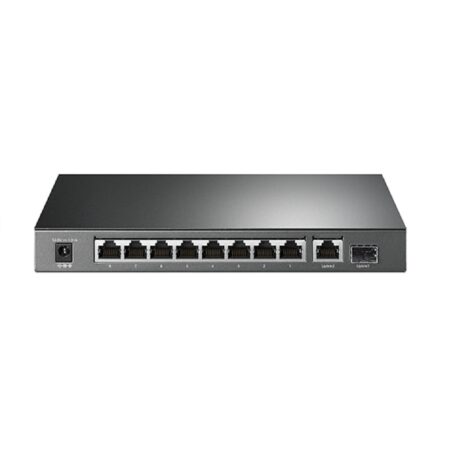
TP-Link TL-SG1210P 8-Port Unmanaged Desktop Gigabit PoE+ Switch w/ 1 x 1GbE RJ45 Port & 1 x 1GbE SFP Port (63W)
TP-Link TL-SG1210P Unmanaged Desktop PoE+ 8 Port Gigabit Switch provides nine (9) 10/100/1000Mbps RJ45 ports and one (1) Gigabit SFP port.
Out of stock
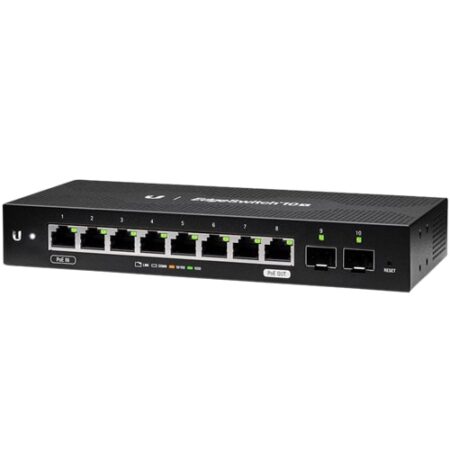
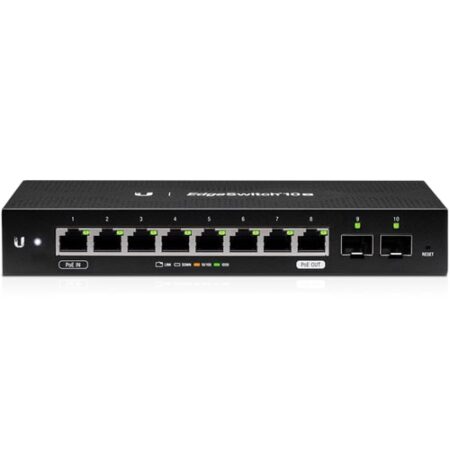
Ubiquiti ES-10X Edge Switch 8-Port Managed Passive PoE Gigabit Switch w/ 2 x 1GbE SFP Ports (52W)
The Ubiquiti ES-10X Edge Switch Managed Passive PoE 8-Port Gigabit Switch is an affordable managed 8-port switch with two additional SFP ports, and is ideal for WISP applications. This switch has eight Gigabit RJ45 ports that offer copper connectivity with PoE input on port 1 and PoE pass through on port 8, as well as two SFP ports providing fibre connectivity. The browser-based configuration interface offers intuitive control using a redesigned UI. Management is also available through the Ubiquiti Network Management System (UNMS).
Out of stock

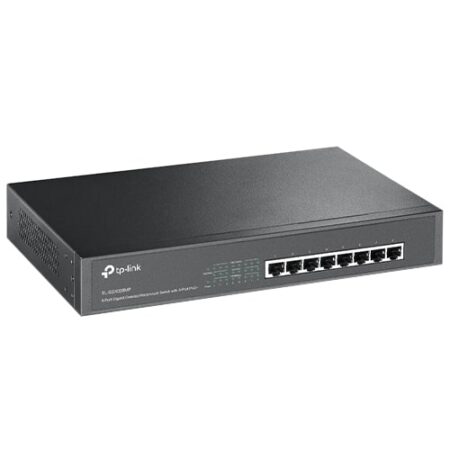
TP-Link TL-SG1008MP 8-Port Unmanaged Rackmount Gigabit PoE+ Switch (126W)
The TP-Link TL-SG1008MP 8-Port Unmanaged Gigabit PoE+ Switch supports the PoE+ standard on all ports. It provides a simple way to expand a wired network by transferring power and data over a single Ethernet Cable. With a total power budget of 126W and up to 30W per port, the TL-SG1008MP can power more high-powered devices such as wireless access points (APs), IP cameras or IP phones. Moreover, with innovative energy-efficient technology, the TL-SG1008MP can save up to 75% of the power consumption, making it an eco-friendly solution for your business network.
Out of stock
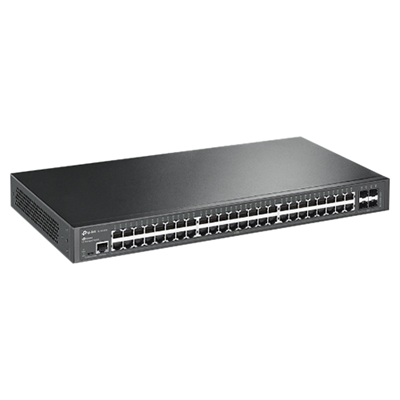
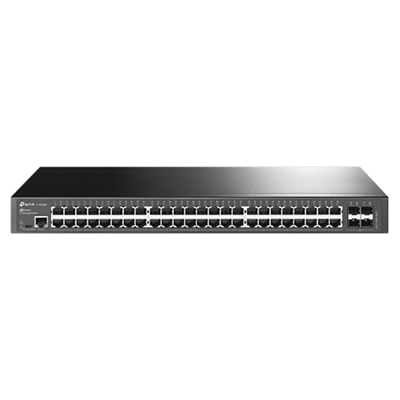
TP-Link TL-SG3452 JetStream 48-Port Smart Managed Rackmount Gigabit Switch w/ 4 x 1G SFP Ports
The TP-Link TL-SG3452 JetStream 48-Port Layer 2 Managed Rackmount Gigabit Switch provides reliable gigabit connections with forty-eight (48) RJ45 ports and four (4) SFP ports. With Omada, you can manage and maintain your TL-SG3452 switch using this Centralised Cloud Management SDN solution to make your network as efficient as it can be. The advanced Layer 2+ features include L2/L3/L4 QoS, ACL, Static Routing and more, along with an abundance of security strategies, such as LAN Area Investment Protection.
Out of stock
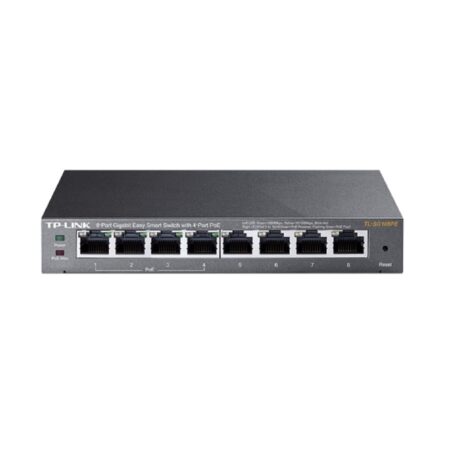
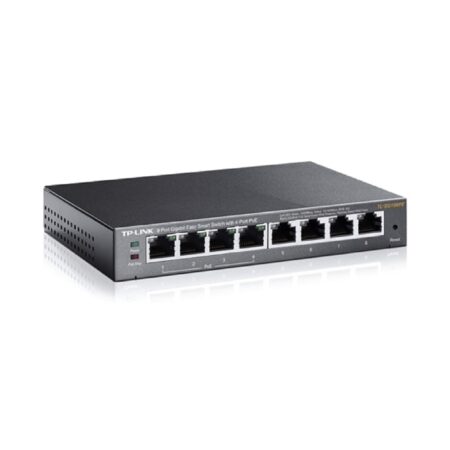
TP-Link TL-SG108PE Easy Smart 8-Port Smart Managed Desktop Gigabit PoE Switch (55W)
TP-Link TL-SG108PE Smart Managed Desktop PoE 8 Port Gigabit Switch represents a powerful upgrade from an unmanaged switch.
Out of stock
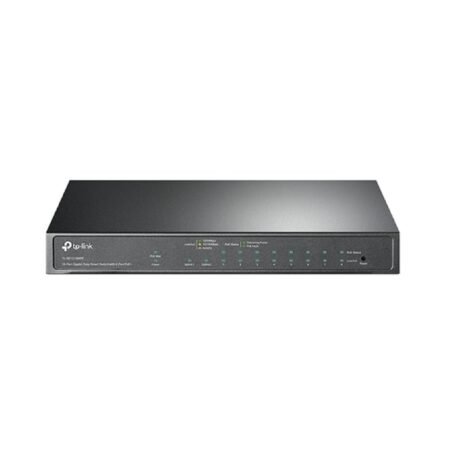
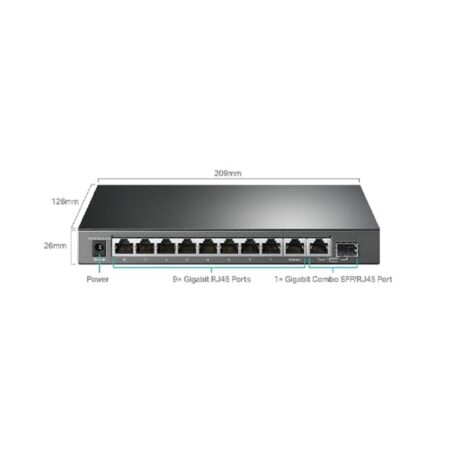
TP-Link TL-SG1210MPE Easy Smart 9-Port Smart Managed Desktop Gigabit PoE+ Switch w/ 1 x 1GbE RJ45/SFP Combo Port (123W)
TP-Link TL-SG1210MPE Easy Smart Desktop PoE+ 9 Port Gigabit Switch is an easy smart switch with nine (9) gigabit RJ45 ports.
Out of stock

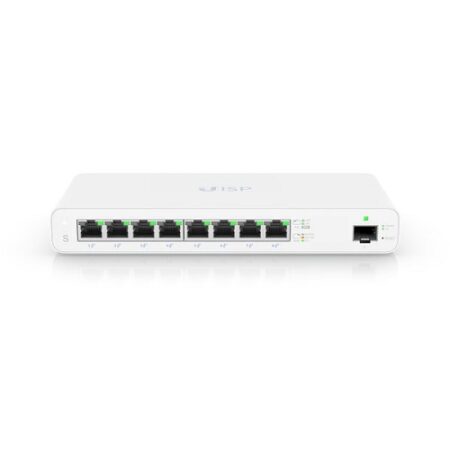
Ubiquiti UISP Gigabit PoE Switch for MicroPoP Applications (UISP-S)
( 2 in Stock – Available for next day shipment )
UISP Switch is a fan-less Layer 2 PoE switch with (8) GbE RJ45 ports and (1) 1G SFP port for an additional fiber uplink option, making it ideal for wireless ISP (WISP) deployments.
2 in stock
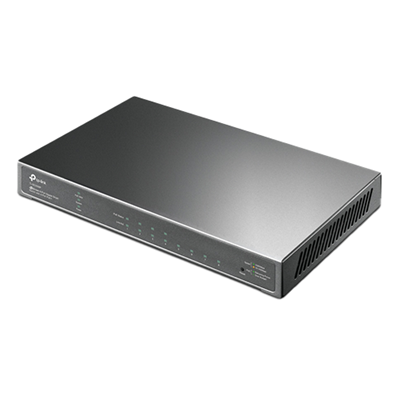
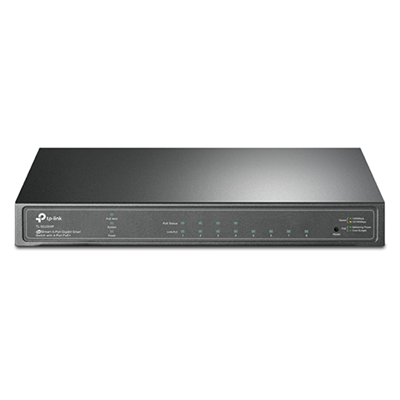
TP-Link TL-SG2008P JetStream 8-Port Smart Managed Desktop Gigabit PoE+ Switch (62W)
Out of stock

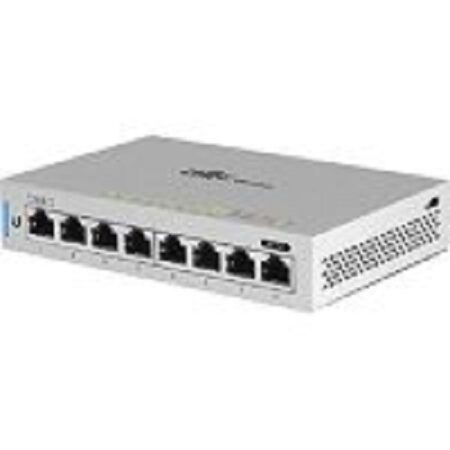
Ubiquiti UniFi US-8-150W Switch
The Ubiquiti UniFi US-8-150W is a fully managed 8 port PoE+ Gigabit switch, delivering robust performance and intelligent switching for growing networks. The US-8-150W is a fanless UniFi switch which delivers a quiet yet powerful performance.
30 in stock


TP-Link TL-SG2210MP 8-Port Smart Managed Rackmount Gigabit PoE+ Switch w/ 2x1GbE SFP Ports (150W) & 3-Year Omada Hosted Cloud Controller Service
The TP-Link TL-SG2210MP JetStream 8-Port Smart Managed Rackmount Gigabit PoE+ Switch is a layer 2 managed switch equipped with eight (8) gigabit RJ45 ports and two (2) SFP slots.
Out of stock
Reviews
There are no reviews yet.