
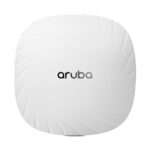
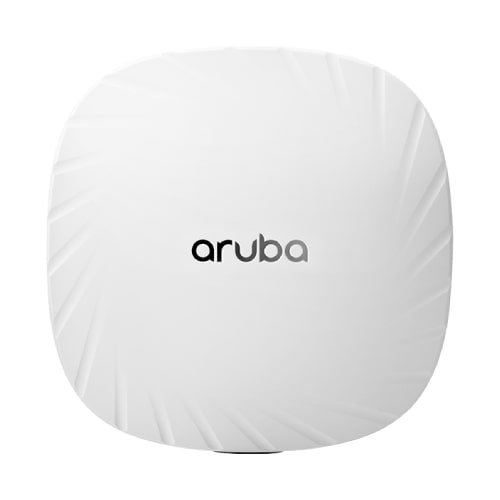
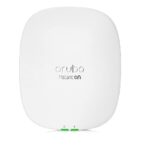
Aruba R2H28A AP-505 PoE WiFi 6 Access Point (AX)

£392.04 inc.VAT / £326.70 exc.VAT
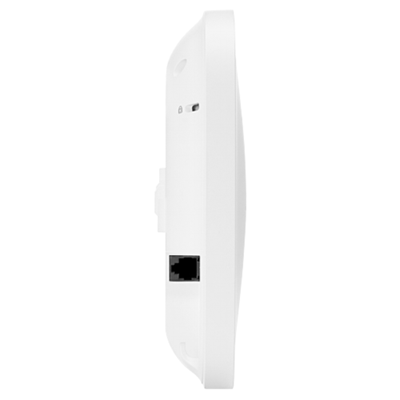
Aruba AP-505 WiFi 6 Access Point (1774 Mbps AX) – R2H28A
Aruba R2H28A AP-505 PoE WiFi 6 Access Point (AX) provides high-performance connectivity for any organisation experiencing growing numbers of mobile, IoT and mobility requirements.

Aruba AP-505 WiFi 6 Access Point (1774 Mbps AX) – R2H28A
Aruba R2H28A AP-505 PoE WiFi 6 Access Point (AX)
Aruba R2H28A AP-505 PoE WiFi 6 Access Point (AX) provides high-performance connectivity for any organisation experiencing growing numbers of mobile, IoT and mobility requirements.With a maximum real-world aggregate data rate of 1.49 Gbps (HE80/HE20), it delivers the speed and reliability needed for venues and workplaces such as schools, midsize offices and retailers.

Key Features
- 1.5 Gbps maximum real-world speed (HE80/HE20)
Delivers speed and reliability for work and indoor environments. - WiFi 6 support for OFDMA plus Client Match
Handles multiple clients on each channel regardless of device or traffic type, using AI to eliminate sticky client issues. - IoT-ready Bluetooth 5 and Zigbee support
Simplifies deploying and managing IoT location services, asset-tracking services, security solutions, IoT sensors, and includes third party USB support. - Dynamic Segmentation and policy- enforcement firewalls
Flexible and scalable, it automatically enforces consistent policies across wired and wireless networks. - AI-powered, WiFi radio frequency RF with AirMatch
Utilising AI learning, Air Match provides automated RF optimisation and looks at analytics across the entire network. - Application assurance
With Air Slice, this AP provides guaranteed bit rate and bounded latency with intelligent scheduling.
Incredible Efficiency
The AP-505 is also designed to optimize user experience by maximizing WiFi efficiency and dramatically reducing airtime contention between clients. Features include Orthogonal frequency-division multiple access (OFDMA), and cellular optimization. With up to 2 spatial streams (2SS) and 80 MHz channel bandwidth (HE80), the Aruba AP-505 provides groundbreaking wireless capabilities for budget-conscious deployments.
Advantages of OFDMA
This capability allows Aruba’s APs to handle multiple WiFi 6 capable clients on each channel simultaneously, regardless of device or traffic type. Channel utilization is optimized by handling each transaction via smaller sub-carriers or resource units (RUs), which means that clients are sharing a channel and not competing for airtime and bandwidth.
Aruba Air Slice for Extended Application Assurance
Initially, APs in controller-less mode (Instant) can provide SLA-grade performance by allocating radio resources, such as time, frequency, and spatial streams, to specific traffic types. By combining Aruba’s Policy Enforcement Firewall (PEF) and Layer 7 deep packet inspection (DPI) to identify user roles and applications, the APs will dynamically allocate the bandwidth needed. Non-WiFi 6 clients can also benefit. Air Slice for APs uses Aruba Central for management. Controller-based APs will be supported in a future software release.
WiFi 6 aware client optimization
Aruba’s patented AI-powered Client Match technology eliminates sticky client issues by placing WiFi 6 capable devices on the best available AP. Session metrics are used to steer mobile devices to the best AP based on available bandwidth, types of applications being used and traffic type – even as users roam.
Aruba Advanced Cellular Coexistence (ACC)
This feature uses built-in filtering to automatically minimize the impact of interference from cellular networks, distributed antenna systems (DAS), and commercial small cell or femto cell equipment.
Intelligent Power Monitoring (IPM)
Aruba APs continuously monitor and report hardware energy consumption. They can also be configured to enable or disable capabilities based on available PoE power – ideal when wired switches have exhausted their power budget.
Green AP energy efficiency
Aruba WiFi 6 APs utilize analytics from Net Insight to automatically transition in and out of a sleep mode based on client density.
IoT Platform Capabilities
Like all Aruba WiFi 6 APs, the AP-505 includes an integrated Bluetooth 5 and 802.15.4 radio (for Zig bee support) to simplify deploying and managing IoT-based location services, asset tracking services, security solutions and IoT sensors. This allows organisations to leverage the AP as an IoT platform, which eliminates the need for an overlay infrastructure and additional IT resources.
Target Wake Time (TWT)
Ideal for IoTs that communicate infrequently, TWT establishes a schedule for when clients need to communicate with an AP. This helps improve client power savings and reduces airtime contention with other clients.
Aruba Secure Infrastructure
The Aruba Ap-505 includes components of Aruba’s 360 Secure Fabric to help protect user authentication and wireless traffic. Select capabilities include:
WPA3 and Enhanced Open
Support for stronger encryption and authentication is provided via the latest version of WPA for enterprise protected networks.
Enhanced Open offers seamless new protection for users connecting to open networks where each session is automatically encrypted to protect user passwords and data on guest networks.
WPA2-MPSK
MPSK enables simpler passkey management for WPA2 devices – should the WiFi password on one device or device type change, no additional changes are needed for other devices. Requires Clear Pass Policy Manager.
VPN Tunnels
In Remote AP (RAP) and IAP-VPN deployments, this AP can be used to establish a secure SSL/IPSec VPN tunnel to a Mobility Controller that is acting as a VPN concentrate.
Trusted Platform Module (TPM)
For enhanced device assurance, all Aruba APs have an installed TPM for secure storage of credentials and keys, and boot code.
Simple and Secure Access
To simplify policy enforcement, this Aruba access point uses Aruba’s policy enforcement firewall (PEF) feature to encapsulate all traffic from the AP to the Mobility Controller (or Gateway) for end-to-end encryption and inspection. Policies are applied based on user role, device type, applications, and location. This reduces the manual configuration of SSIDs, VLANs and ACLs. PEF also serves as the underlying technology for Aruba Dynamic Segmentation.

High-Density Connectivity
Each AP-505 provides connectivity for a maximum of 256 associated clients per radio (512 in total). In real-world scenarios, the maximum recommended client density is dependent on environmental conditions.
Flexible Operation and Management
A unique feature of Aruba APs is the ability to operate in either controller-less (Instant) or controller-based mode.
Controller-less (Instant) mode
In controller-less mode, one AP serves as a virtual controller for the entire network. Learn more about Instant mode in this technology brief.
Mobility Controller mode
For optimized network performance, roaming and security, APs tunnel all traffic to a mobility controller for centrally managed traffic forwarding and segmentation, data encryption, and policy enforcement.
Management options
Available management solutions include Aruba Central (cloud-managed) or Aruba AirWave – a multi-vendor on-premises management solution.
For large installations across multiple sites, APs can be factory-shipped and can be activated with Zero Touch Provisioning through Aruba Central or AirWave. This reduces deployment time, centralises configuration, and helps manage inventory.
Additional WiFi Features
Each AP also includes the following standards-based technologies:
- Transmit beamforming (TxBF)
Increased signal reliability and range - Passpoint WiFi (Release 2)(Hotspot 2.0)
Seamless cellular-to-WiFi carryover for guests - Dynamic Frequency Selection (DFS)
Optimised use of available RF spectrum - Maximum Ratio Combining (MRC)
Improved receiver performance. - Cyclic Delay/Shift Diversity (CDD/CSD)
Greater downlink RF performance - Space-Time Block Coding
Increased range and improved reception - Low-Density Parity Check (LDPC)
High-efficiency error correction for increased throughput
Specifications
Technical Specifications
AP type
- Indoor, dual radio, 5GHz and 2.4GHz 802.11ax 2×2 MIMO
5GHz radio
- Two spatial stream Single User (SU) MIMO for up to 1.2Gbps wireless data rate with 2SS HE80 802.11ax client devices
2.4GHz radio
- Two spatial stream Single User (SU) MIMO for up to 574Mbps (287 Mbps) wireless data rate with 2SS HE40 (HE20) 802.11ax client devices
Maximum number of associated client devices
- Up to 256 associated client devices per radio
Maximum number of BSSIDs
- 16 BSSIDs per radio
Supported frequency bands (country-specific restrictions apply)
- 2.400 to 2.4835GHz
- 5.150 to 5.250GHz
- 5.250 to 5.350GHz
- 5.470 to 5.725GHz
- 5.725 to 5.850GHz
Available channels
- Dependent on configured regulatory domain
Supported radio technologies
- 802.11b: Direct-sequence spread-spectrum (DSSS)
- 802.11a/g/n/ac: Orthogonal frequency-division multiplexing (OFDM)
- 802.11ax: Orthogonal frequency-division multiple access (OFDMA) with up to 8 resource units
Supported modulation types
- 802.11b: BPSK, QPSK, CCK
- 802.11a/g/n: BPSK, QPSK, 16-QAM, 64-QAM, 256-QAM (proprietary extension)
- 802.11ac: BPSK, QPSK, 16-QAM, 64-QAM, 256-QAM, 1024-QAM (proprietary extension)
- 802.11ax: BPSK, QPSK, 16-QAM, 64-QAM, 256-QAM, 1024-QAM
802.11n high-throughput (HT) support
- HT20/40
802.11ac very high throughput (VHT) support
- VHT20/40/80
802.11ax high efficiency (HE) support
- HE20/40/80
Supported data rates (Mbps)
- 802.11b: 1, 2, 5.5, 11
- 802.11a/g: 6, 9, 12, 18, 24, 36, 48, 54
- 802.11n: 6.5 to 300 (MCS0 to MCS15, HT20 to HT40), 400 with 256-QAM
- 802.11ac: 6.5 to 867 (MCS0 to MCS9, NSS = 1 to 2, VHT20 to VHT80), 1,083 with 1024-QAM
- 802.11ax (2.4GHz): 3.6 to 574 (MCS0 to MCS11, NSS = 1 to 2, HE20 to HE40)
- 802.11ax (5GHz): 3.6 to 1,201 (MCS0 to MCS11, NSS = 1 to 2, HE20 to HE80)
802.11n/ac/ax packet aggregation
- A-MPDU, A-MSDU
Transmit power
- Configurable in increments of 0.5 dBm
Maximum (aggregate, conducted total) transmit power (limited by local regulatory requirements)
- 2.4 GHz band: +21 dBm (18dBm per chain)
- 5 GHz band: +21 dBm (18 dBm per chain)
- Note: Conducted transmit power levels exclude antenna gain. For total (EIRP) transmit power, add antenna gain.
WiFi Antenna
Antennas
- Two integrated dual-band downtilt omni-directional antennas for 2×2 MIMO with peak antenna gain of 4.9dBi in 2.4GHz and 5.7dBi in 5GHz. Built-in antennas are optimised for horizontal ceiling mounted orientation of the AP. The downtilt angle for maximum gain is roughly 30 degrees.
- Combining the patterns of each of the antennas of the MIMO radios, the peak gain of the combined, average pattern is 4.3dBi in 2.4GHz and 5.6dBi in 5GHz.
Other Interfaces
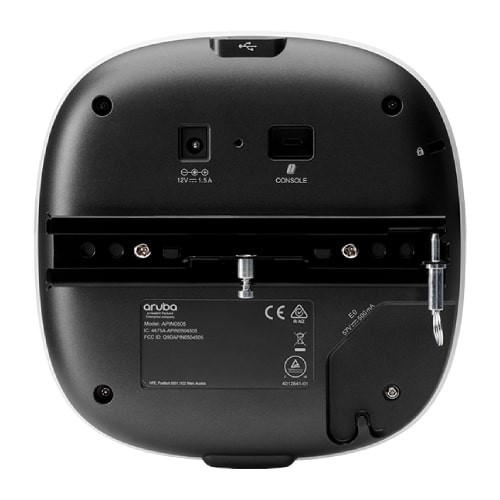
E0: Ethernet wired network port (RJ-45)
- Auto-sensing link speed (10/100/1000BASE-T) and MDI/MDX
- POE-PD: 48Vdc (nominal) 802.3af/at POE (class 3 or 4)
- 802.3az Energy Efficient Ethernet (EEE)
DC power interface
- 12Vdc (nominal, +/- 5%), accepts 2.1mm/5.5mm centre-positive circular plug with 9.5mm length
USB 2.0 host interface (Type A connector)
- Capable of sourcing up to 1A / 5W to an attached device
Bluetooth Low Energy (BLE5.0) and Zigbee (802.15.4) radio
- BLE: up to 7dBm transmit power (class 1) and -93dBm receive sensitivity (1Mbps)
- Zigbee: up to 6dBm transmit power and -96dBm receive sensitivity
- Integrated vertically polarised omnidirectional antenna with roughly 30 degrees downtilt and peak gain of 3.3dBi
Visual indicators (two multi-colour LEDs)
- For System and Radio status
Reset button
- Factory reset, LED mode control (normal/off)
Serial console interface
- Proprietary, micro-B USB physical jack
Security slot
- Kensington security slot
Power Sources and Power Consumption
Power Sources: The AP supports direct DC power and Power over Ethernet
- The AP supports direct DC power and Power over Ethernet
- When both DC and POE power sources are available, DC power takes priority over POE
- Power sources are sold separately; see the 500 Series Ordering Guide for details
- When powered by DC or 802.3at (class 4) POE, the AP will operate without restrictions.
- When powered by 802.3af (class 3) POE and with the IPM feature disabled, the AP will disable the USB port. In the same configuration but with IPM enabled, the AP will start up in unrestricted mode, but may dynamically apply restrictions depending on the POE budget and actual power. The feature restrictions and order can be programmed.
Maximum (worst-case) power consumption (without / with a USB device attached)
- DC powered: 8.9W / 14.2W.
- POE powered (802.3at): 11.0W / 16.5W.
- POE powered (802.3af): 11.0W / 13.5W.
- This assumes that up to 5W is supplied to the attached USB device.
Maximum (worst-case) power consumption in idle mode
- 4.3W (DC) or 6.2W (POE).
Maximum (worst-case) power consumption in deep-sleep mode
- 1.7W (DC) or 3.7W (POE).
Mechanical Specifications
Dimensions (W x D x H)
- 160 x 161 x 37 mm
Weight
- 500 g
Mounting details
- A mounting bracket has been pre-installed on the back of the AP. This bracket is used to secure the AP to any of the mount kits (sold separately).
Environmental Specifications
Operating conditions
- Temperature: 0°C to 50°C (32°F to 122°F)
- Humidity: 5% to 93% non-condensing
- AP is plenum rated for use in air-handling spaces
- ETS 300 019 class 3.2 environments
Storage and transportation conditions
- Temperature: -40°C to 70°C (-40°F to 158°F)
- Humidity: 5% to 93% non-condensing
- ETS 300 019 classes 1.2 and 2.3 environments
Reliability
Mean Time Between Failure (MTBF)
- 1.3Mhrs (148yrs) at 25°C operating temperature.
Regulatory and Safety Compliance
Minimum ArubaOS Release
- ArubaOS and Aruba InstantOS 8.6.0.0
Regulatory compliance
- FCC/ISED
- CE Marked
- RED Directive 2014/53/EU
- EMC Directive 2014/30/EU
- Low Voltage Directive 2014/35/EU
- UL/IEC/EN 60950
- EN 60601-1-1, EN60601-1-2
- Railway Certs:
- EN 50155:2017 – Railway Applications
- EN 50121-1:2017 – Railway EMC
- EN 50121-3-2 – Railway EMC
- EN 50121-4:2016 – Railway Immunity
- IEC 61373 ed2:2008 – Railway Shock and Vibration
Certifications
- UL2043 plenum rating
- WiFi Alliance:
- WiFi CERTIFIED a, b, g, n, ac
- WiFi CERTIFIED 6 (ax)
- WPA, WPA2 and WPA3 – Enterprise with CNSA option, Personal (SAE), Enhanced Open (OWE)
- WMM, WMM-PS, WiFi Vantage, WiFi Agile Multiband
- WiFi Location
- Passpoint (release 2)
- Bluetooth SIG
- Ethernet Alliance (POE, PD device, class 4)
Standard Warranty: Limited Lifetime
Only logged in customers who have purchased this product may leave a review.
Related Products
Aruba Instant On AP25 (RW) 4×4 Wi-Fi 6 Indoor Access Point
Aruba Instant On AP25 Wi-Fi 6 AP Access Point from Hewlett Packard Enterprise supports the Wi-Fi 6 standard also (OFDMA) and Multi-User MIMO (MU-MIMO) & Target Wait Time (TWT).
101 in stock
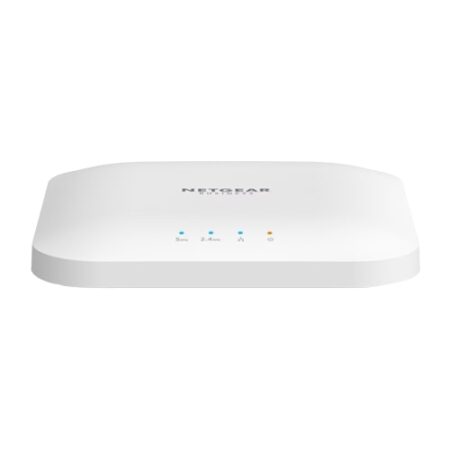
NETGEAR WAX214-100EUS Essentials WiFi 6 Access Point (1800Mbps AX)
The NETGEAR WAX214Essentials PoE+ WiFi 6 Access Point (AX) delivers 802.11ax high performance wireless connectivity for Small Office and Home Office (SOHO) deployments and supports dual band concurrent WiFi 6 operations at 2.4GHz and 5GHz with a combined throughput of 1.8Gbps (600Mbps at 2.4GHz and 1200Mbps at 5GHz). The WAX214 WiFi 6 Access Point provides standalone configuration with easy setup for a reliable, WiFi 6 802.11ax high performance, and cost effective wireless solution. The WAX214 can be powered by Power-over-Ethernet or a DC power adapter (sold separately).
Out of stock

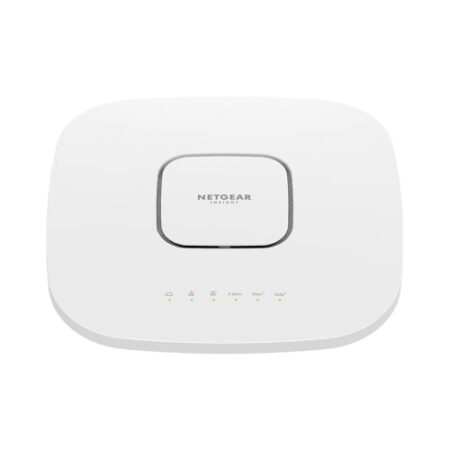
NETGEAR WAX630E Tri-Band WiFi 6E Access Point w/ Insight (7800Mbps AX)
The NETGEAR WAX630E Tri-Band WiFi 6E Access Point is a 2.4GHz, 5GHz and 6GHz tri-band access point delivering up to 7.8Gbps total WiFi throughput, supported by 2.5Gbps Power-over-Ethernet and a 1Gbps Ethernet port. The WAX630E enables WiFi 6E, operating on the 6GHz band to deliver unprecedented data throughput speed and available channels for WiFi connectivity with smartphones, IoTs, and computers.
16 in stock
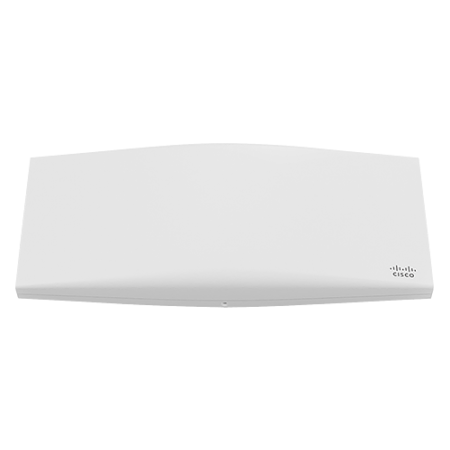
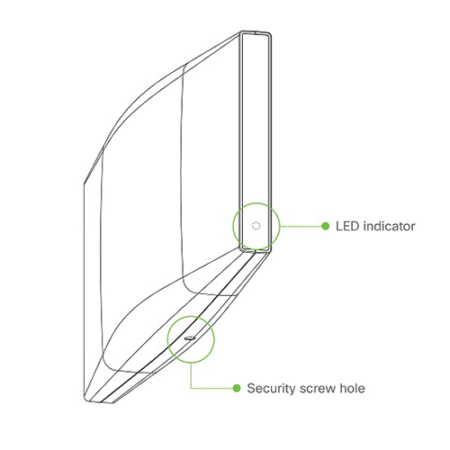
Meraki MR46 Cloud Managed WiFi 6 PoE+ Access Point w/ 3-Year Enterprise Licence (3549Mbps AX)
The Meraki MR46 Cloud Managed WiFi 6 PoE+ Access Point raises the bar for wireless performance and efficiency. Designed for next-generation deployments in offices, schools, hospitals, shops, and hotels, the MR46 offers high throughput, enterprise-grade security, and simple management. The MR46 provides a maximum of 3.5 Gbps aggregate frame rate with concurrent 2.4 GHz and 5 GHz radios. A dedicated third radio provides real-time WIDS/WIPS with automated RF optimisation, and a fourth integrated radio delivers Bluetooth scanning and beaconing.
Out of stock
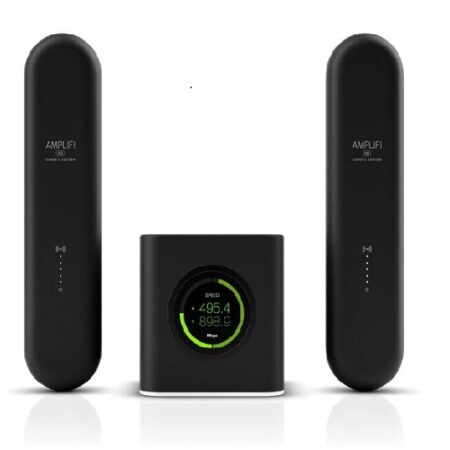

Ubiquiti AmpliFi HD Whole Home WiFi Mesh NVIDIA Gamer’s Edition- AFI-G-UK
The Ubiquiti AmpliFi HD Gamer’s Edition kit (AFI-G-UK) includes an AmpliFi Mesh Router along with two wireless Mesh Points. The AFI-G combines deployment flexibility and simplicity with maximum WiFi coverage for your home.
27 in stock
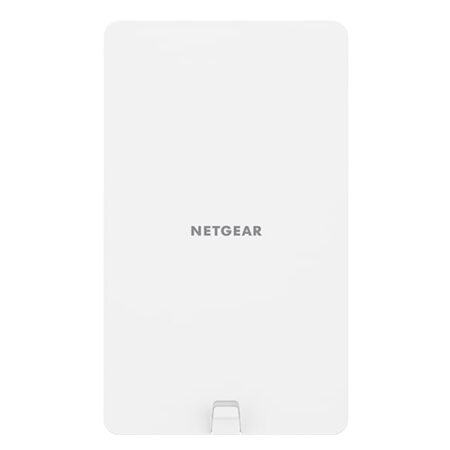
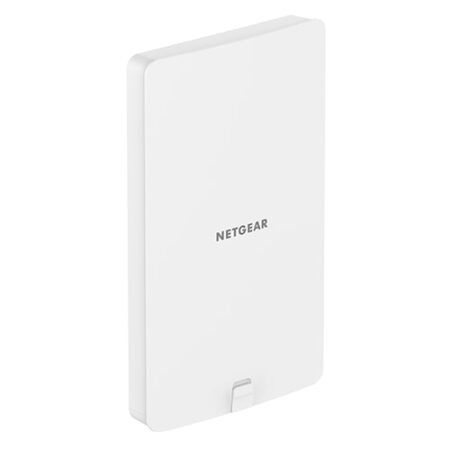
NETGEAR WAX610Y-100EUS Outdoor WiFi 6 PoE+ Access Point (1800Mbps AX) w/ Insight
Please note: Powered by PoE only, cannot be powered through a power adapter.
The NETGEAR WAX610Y Insight Outdoor WiFi 6 Access Point (AX) supports the next generation WiFi 6 smart phones, IoT devices, and notebook computers, delivering up to 40% more throughput to each individual device in the 5GHz band and 70% more throughput in the 2.4GHz band, compared to the previous generation equivalent model. It provides 4x the client device connection, allowing businesses to serve more customers with better speed and less congestion. The WAX610Y is ideal in high density client device environments such as schools, hotels, restaurants and conference centres, and provides enterprise grade WiFi network security. With Insight management, WAX610Y works seamlessly with your current NETGEAR Insight managed switches, WiFi access points and network storage, and is compatible with previous generation WiFi devices (WiFi 5 802.11ac for example) and WiFi Access Points.
2 in stock
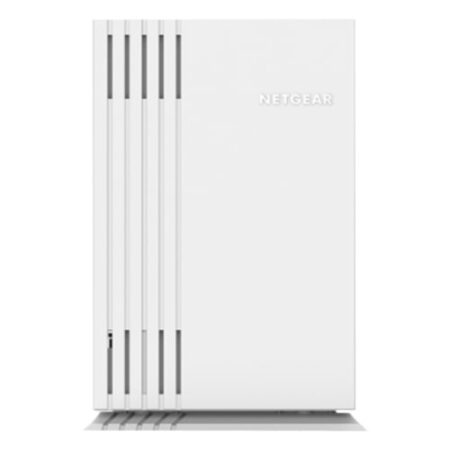
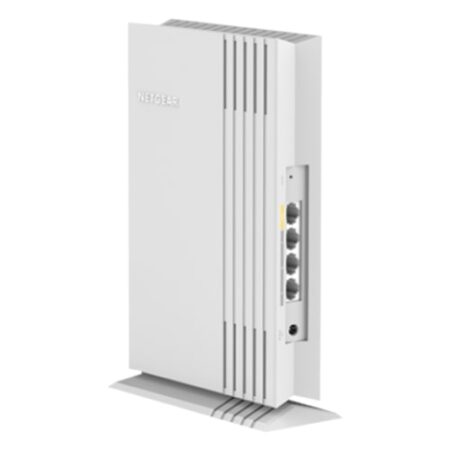
NETGEAR WAX202 Essentials WiFi 6 Access Point (1800 Mbps AX)
NETGEAR WAX202 WiFi 6 Access Point delivers 802.11ax (WiFi 6) high-performance wireless connectivity for Small Office and Home Office (SOHO) deployments.
Out of stock

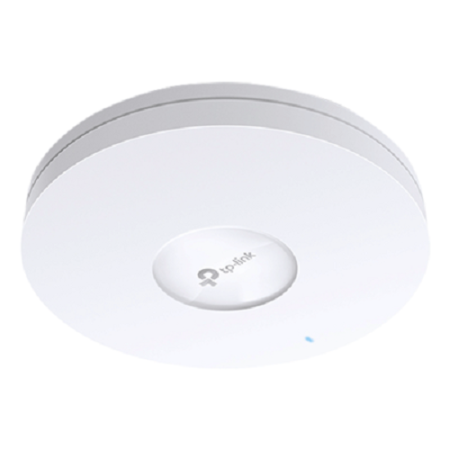
TP-Link EAP610 Omada WiFi 6 Access Point (1775Mbps AX)
The TP-Link EAP610 WiFi 6 Access Point is an AX1800 Ceiling Mount WiFi 6 Access Point and is ideal for networking upgrades to WiFi 6, such as offices, campuses, retail, and hotels. WiFi 6 technology provides faster speeds, less lag, and higher capacity. Advanced functions including Omada Mesh, Seamless Roaming, MU-MIMO, and Captive Portal further boost network security, efficiency, and coverage. Additionally, this product is integrated into Omada Software Defined Networking (SDN) system, and can be centrally managed with cloud access via Omada Hardware Controller or Software Controller. The ability to control, adjust, and visualise the entire network from any connected PC makes centralised business WiFi management more efficient than ever before.
Out of stock
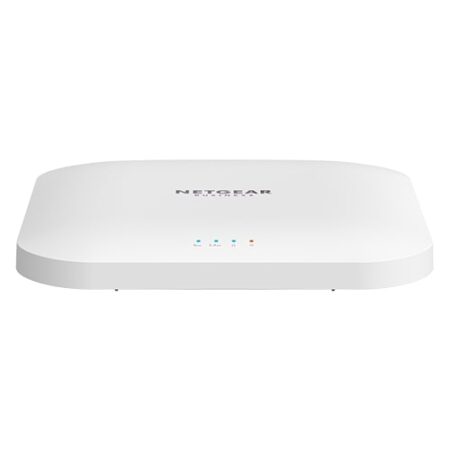
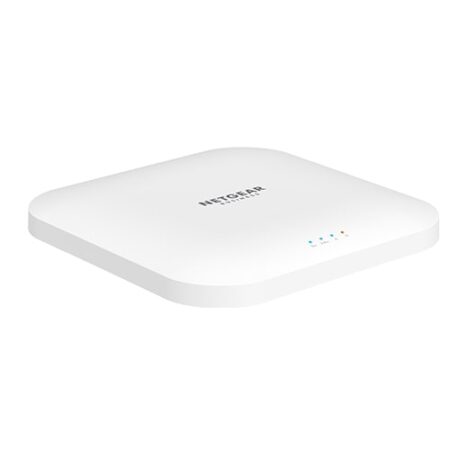
NETGEAR WAX218-100EUS Essentials WiFi 6 Access Point (3549 Mbps AX)
NETGEAR WAX218 Essentials PoE+ WiFi 6 Access Point (AX) delivers 802.11ax high performance wireless connectivity for Small Office and Home Office (SOHO) deployments
1 in stock
Ubiquiti AmpliFi Instant Home Mesh WiFi Router AFI-INS-R
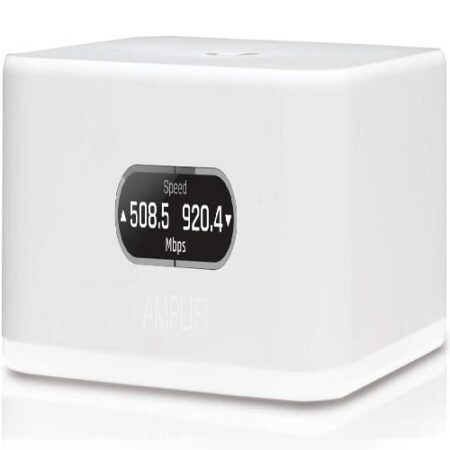
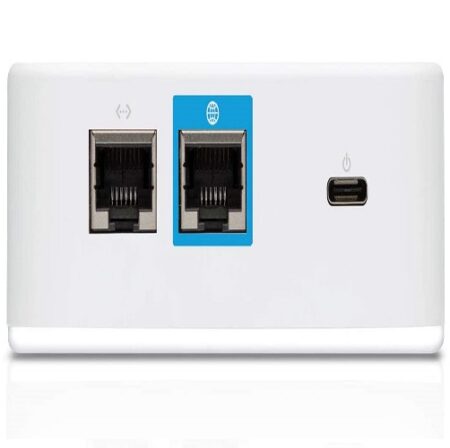
The Ubiquiti AmpliFi Instant Home WiFi Router -AFI-INS-R, is an instant wireless router for home and domestic WiFi deployments. It features mesh technology, an easy-to-use touchscreen display, one Gigabit Ethernet port, a WAN port, and an Ethernet cable. The AmpliFi Router provides excellent coverage for standard-sized homes of approximately 2,000 sq ft. Expand as needed by adding MeshPoints to your mesh Wi-Fi system.
Out of stock

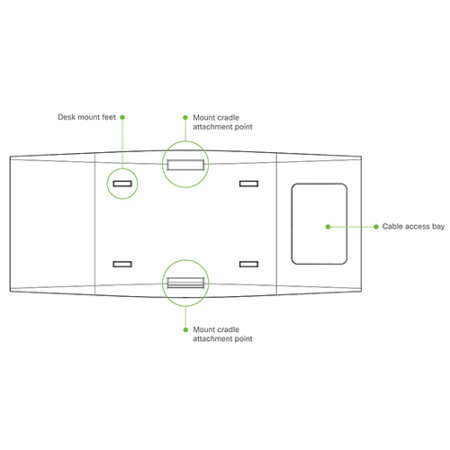
Cisco Meraki MR36 Cloud Managed 2×2 WiFi 6 PoE 802.11ax Access Point (1774Mbps AX)
This device does not come supplied with a PoE injector – please see accessories tab.
Out of stock
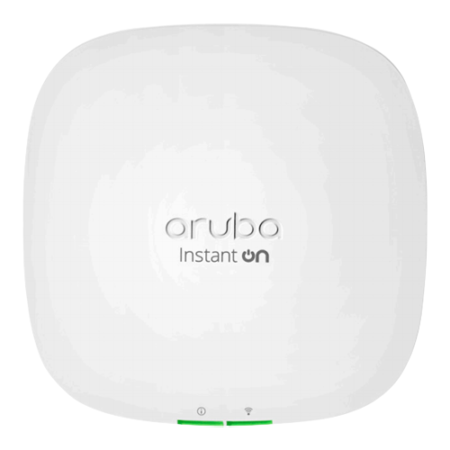
Aruba AP22 Instant On WiFi 6 Access Point (1774Mbps AX) – R4W02A
The Aruba R4W02A Instant On AP22 WiFi 6 Access Point is perfect for small businesses with expanding mobile, cloud, and IoT requirements. WiFi Certified 6 AP22 access points deliver faster WiFi speeds, greater capacity, and reduced latency between access points and devices for a superior WiFi experience. With the AP22, you can upgrade your WiFi network to boost performance across devices now, while preparing it for more mobile and IoT devices in the future.
637 in stock
Reviews
There are no reviews yet.